
EDITOR’S NOTE
Ergatta joined Interactive Strength on March 11, 2026. Eleven weeks later, the business is consolidated into TRNR’s financials, contributed to Q1 2026 reported results, and will appear for the first full quarter in Q2 2026. What follows is a conversation with Ergatta Co-Founder and CEO Tom Aulet on what Ergatta is, how it makes money, and what it means for an investor in TRNR. We have edited for length and clarity.
THE BUSINESS
In thirty seconds, what is Ergatta, and who is it for?
Ergatta is the world’s leading fitness game studio. We develop game-based workout content for cardio equipment that is highly engaging, personalized to the user, and designed to form a lasting fitness habit.
We bring our gaming content to market in two ways.
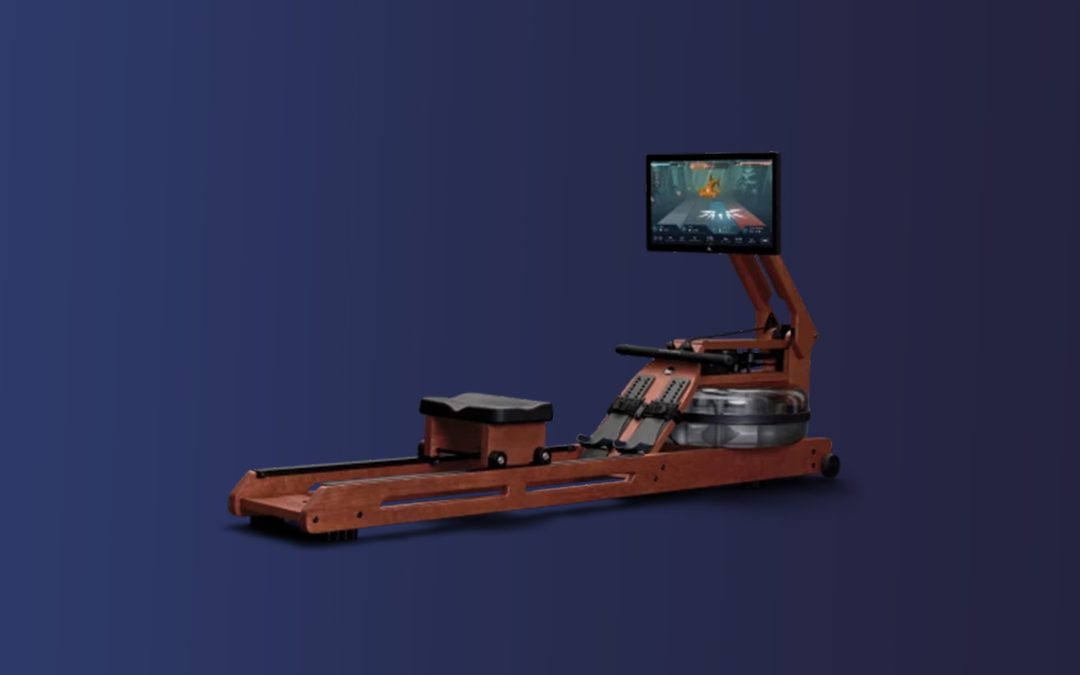
- We sell connected rowing machines with integrated screens. The rowers are beautifully designed, manufactured out of wood in the USA, and come with an integrated fitness content offering that’s centered around our game-based workouts.
- We license select games to third party fitness equipment brands like NordicTrack.
Ergatta is for people who want to work out and build a regular fitness habit but have struggled to do so in instructor-led settings. Not everyone wants to work with a trainer, or watch a trainer talk to them – for a lot of people, that’s not motivating. That’s our core customer, they are generally not addressed by alternative fitness offerings, and it’s actually quite a big population. These people skew male, introverted and competitive. More than a ‘Ra-Ra’ fitness class environment, they want to compete, progress, and feel a real sense of achievement. That’s what our gaming content delivers.
You founded Ergatta in 2019. What were you seeing in connected fitness that wasn’t being served?
The central thesis was around fitness content innovation to serve a different customer profile. Peloton was clearly onto something: a holistic, in-home fitness offering combining premium cardio equipment, an integrated screen, and – critically – compelling and high-quality fitness content. That model was very effective, but not for everyone. Because their experience was so focused on their star instructors and re-creating the boutique fitness class experience in the home, it didn’t actually have universal appeal. Ergatta is a similar concept, but designed for a different consumer persona, and thus centered around a different type of content: gaming. That thesis has held up very well: we attract a different customer (>60% male) that didn’t previously have a regular fitness habit (⅔ report having no prior fitness habit) – and we help them build one (>98% Net Monthly Retention). We have been laser-focused on doing that better than anyone else in the world for seven to eight years.
HOW ERGATTA MAKES MONEY
The rowing machine business and the content licensing business. How do those two sides of Ergatta fit together?
Both matter, and they matter in different ways. From a reach perspective, the licensing side is enormous. Through partners like iFIT, our content is in more homes than it is through our own machines. That brand visibility is a real positive for us. But also, from a revenue perspective, the majority of our revenue today and for the foreseeable future, will come from direct Rower customers. The LTV (lifetime value) of one rowing machine customer is massive. They buy the rowing machine and they carry a subscription, typically for years, that is high margin and high retention. Our direct rowing machine purchasers and subscribers are our core business where we make most of our money, but content licensing is a meaningful value-add and a brand halo.
And what does that translate into financially?
In short, a well-run and profitable business running an EBITDA margin of over 30% in a category (connected fitness) where leading brands tend to be unprofitable and poorly run. We’ve been able to drive to this outcome partly because we are disciplined in how we manage costs and partly in how we’ve set up our supply chain and inventory management operations. But it’s also driven by the underlying economics of gaming content vs class content. Game design and development has very different economics than the live-class category. Companies built on live class content are effectively media companies – with high ongoing content production costs. They have studios, on-screen talent, production teams, and they have to churn out high-cost live programming with high frequency.
We are a game studio. There is an upfront investment to build the games, and then it scales to thousands of workouts (live & on-demand) at relatively low marginal cost. The economics of gaming are more like software than like content production. That is a big part of why our free cash flow margins are above 30%. The content offering is incredibly effective and valuable for our customers, driving industry-leading retention of over 98%. Our membership costs anywhere from $27-$39/mo, and is the core financial driver of the business.
Game-based fitness sounds like the headline differentiator. Why is it sticky in a way instructor-led models haven’t been?
We think that basically it hits the same parts of the brain that get activated when you play a sport or play a video game. Competition. Skill mastery. Real-time feedback. A sense of progress and achievement. The tools of gaming, if deployed effectively, can be extremely effective at both short-term entertainment and long-term habit formation. That is a different kind of motivation than following along with an instructor. For the large portion of the consumer fitness market that doesn’t respond to a class-based model, that motivation is what gets them through the workout and brings them back for more. Game-based fitness works: it’s very sticky and attracts an incremental customer. And we do it better than any other brand in the space.
INSIDE THE CATEGORY
How do you describe Ergatta’s lane inside TRNR’s portfolio?
We pride ourselves at being very good at software product development, subscription business management, and DTC marketing. We benefit from some other skillsets within TRNR, including supply chain management and commercial/B2B equipment sales. We bring different and incremental lines of business to the TRNR portfolio in our US-based DTC residential equipment sales, a meaningful subscription business, and a small but growing B2B content licensing business. These lines of business are different and complementary to TRNR, helping to form a larger, more stable and more diversified business.
Why will Ergatta thrive while other connected fitness brands haven’t?
In short, because we are financially viable and differentiated.The category was over-funded during COVID. It is too competitive and there are too many brands. There are zombie companies in the space that are financially non-viable. The shakeout isn’t finished. But Ergatta’s not going anywhere, given that we’re profitable and now part of the TRNR portfolio. The business works financially, which is the precondition for everything else. The reference point for the problems in the overall category is Peloton – they put the category on the map in a lot of ways, but their economic and management challenges are well-known. We are different – a disciplined, highly profitable business inside a category that has the opposite reputation. That is the part I most want investors to internalize.
The other point worth making here is that Ergatta has a real reason to exist. Without Ergatta, there would not be quality connected fitness products with compelling gaming content and our customer would go unaddressed and struggle to form a fitness habit. From a consumer benefit perspective, this is the core reason why we will continue to thrive in a difficult category.
INSIDE TRNR
What does being part of TRNR unlock for Ergatta that wouldn’t have been available as a standalone?
We found a home that rewards our investors and aligns our capital and corporate structure with our go-forward business strategy and plan. This helps us align incentives appropriately and set up the business for long-term success.
How does Ergatta change TRNR’s path to consolidated profitability?
Ergatta generates substantial free cash flow at the brand level. That cash flows up to the group. It helps fund growth investments and other acquisitions. It significantly reduced the amount of outside capital TRNR had to raise to fund operations and it accelerates the group’s objective of achieving profitability. With Wattbike already in the portfolio and performing well, and the acquisition pipeline TRNR has described, the path to profitability is straightforward. It’s also the main thing we analyzed during diligence before selecting TRNR as our partner.
You’ve gone from running a private, venture-backed company to running a brand inside a public one. What changes, and what stays the same?
What stays the same is our core strategy and operating discipline. We had a clear strategy and financial approach as a private company. That is the posture TRNR was looking for and it is the posture we keep. What changes is everything around us. Our investor base and incentive structure. A portfolio of other brands we can learn from and to which we can contribute. Additionally, there is an exciting acquisition pipeline that could help transform TRNR from what investors may understand today.
IN CLOSING
What do you most want investors to take away about Ergatta?
Game-based fitness as a concept is here to stay and we are the leaders in it. It’s habit-forming and for the right customer, it just works. Doing this better than anyone else in the world has been our primary focus for 7 years and it shows.
TRNR INVESTORS – WHAT TO WATCH FOR NEXT?
Q2 2026 reported results. Q2 2026 will be the first full quarter of Ergatta consolidated into TRNR’s reported financials. Q1 2026 reported revenue of $5.1 million included only 21 days of Ergatta. Q1 2026 pro forma combined revenue, including a full quarter of Ergatta, was approximately $7.7 million.
Cautionary Statement Regarding Forward-Looking Statements
This communication includes certain statements that are “forward-looking statements” for purposes of the safe harbor provisions under the United States Private Securities Litigation Reform Act of 1995. Forward-looking statements do not relate strictly to historical or current facts and reflect management’s assumptions, views, plans, objectives and projections about the future. Forward-looking statements generally are accompanied by words such as “believe,” “project,” “expect,” “anticipate,” “estimate,” “intend,” “strategy,” “future,” “opportunity,” “plan,” “may,” “should,” “will,” “would,” “will be,” “will continue,” “will likely result,” “trajectory,” “target,” similar expressions that predict or indicate future events or trends or that are not statements of historical matters, or the negative of these terms or other comparable terms that predict or indicate future events or trends or that are not statements of historical matters. However, the absence of these words does not mean that the statements are not forward-looking. These forward-looking statements include, but are not limited to, statements regarding the possibility of acquiring future businesses, the financial performance of those acquisitions, the resulting guidance of having more than $30M of pro forma revenue in 2026, the future performance of Ergatta and the TRNR portfolio, the expected timing of subsequent reporting periods, the expected continued integration of Ergatta, content licensing revenue growth, and achieving profitability. The reader is cautioned not to rely on these forward-looking statements. These statements are based on current expectations of future events. If underlying assumptions prove inaccurate or known or unknown risks or uncertainties materialize, actual results could vary materially from the expectations and projections of the Company. A further list and descriptions of these risks, uncertainties and other factors can be found in filings with the Securities and Exchange Commission. To the extent permitted under applicable law, the Company assumes no obligation to update any forward-looking statements.
# # #